Spa Moving in Southern California
Spa Moving in Southern California for Every Size and Style of Spa
Spas come in many shapes and sizes, from compact two-person models to eight-seat family spas and long swim spas. Each one needs a different approach during spa moving. Weight, length, shell material, and the layout of the property all determine how a spa is loaded, carried, and set in place. Express Spa Deliveries provides spa moving in Southern California for homeowners, buyers, sellers, and property owners who need a spa relocated without damage to the unit or the surrounding property. Every spa moving job starts with a clear look at the spa itself and the path it needs to travel.
Book Spa Moving in Southern California With Express Spa Deliveries
Planning a Spa Moving Route in Southern California
Southern California properties vary widely, and the route a spa takes matters just as much as the equipment used.
Measuring Access Points
Before spa moving day, gates, side yards, and walkways are measured against the spa's height and depth. A spa that is 36 inches deep can usually pass through a 40-inch opening when tipped on its side.
Hillside and Sloped Lots
Homes in the hills around the lake often have steep driveways and terraced yards. Spa moving on these properties requires controlled descent and additional hands to keep the load steady.
Gated Communities and HOAs
Many Southern California neighborhoods have gate access, delivery hours, and parking restrictions. Confirming these details ahead of time keeps spa moving on schedule.
Get a Spa Moving Estimate for Your Southern California Property
Preparing Your Spa Before Moving
A few preparation steps make spa moving safer and help protect your spa's internal components.
Drain the Spa Completely
Drain the spa at least 24 to 48 hours before spa moving. Remaining water adds weight and can shift inside the plumbing during transport.
Disconnect Electrical Service
A licensed electrician should shut off power at the breaker and disconnect the spa's wiring before the crew arrives.
Remove the Cover and Accessories
Covers, cover lifters, steps, and handrails should be removed and moved separately so they are not damaged during spa moving.
Prepare the New Foundation
The new location needs a level concrete pad, reinforced deck, or spa base that can support the spa's filled weight.
Equipment Used in Spa Moving
The right equipment protects both the spa and the people moving it. Spa moving relies on tools built specifically for heavy, oversized, and awkward loads.
Spa Sleds and Dollies
A spa sled supports the spa on its side and allows it to glide over grass, pavers, and concrete. Dollies with wide wheels help distribute the weight across soft ground.
Straps and Padding
Ratchet straps secure the spa during transport, while padding and blankets protect the cabinet and shell from scrapes and pressure points.
Trailers Built for Heavy Loads
Spa moving requires a trailer with a low deck and the capacity to carry the full weight of the spa. Low-deck trailers make loading and unloading safer.
Crane Lifts
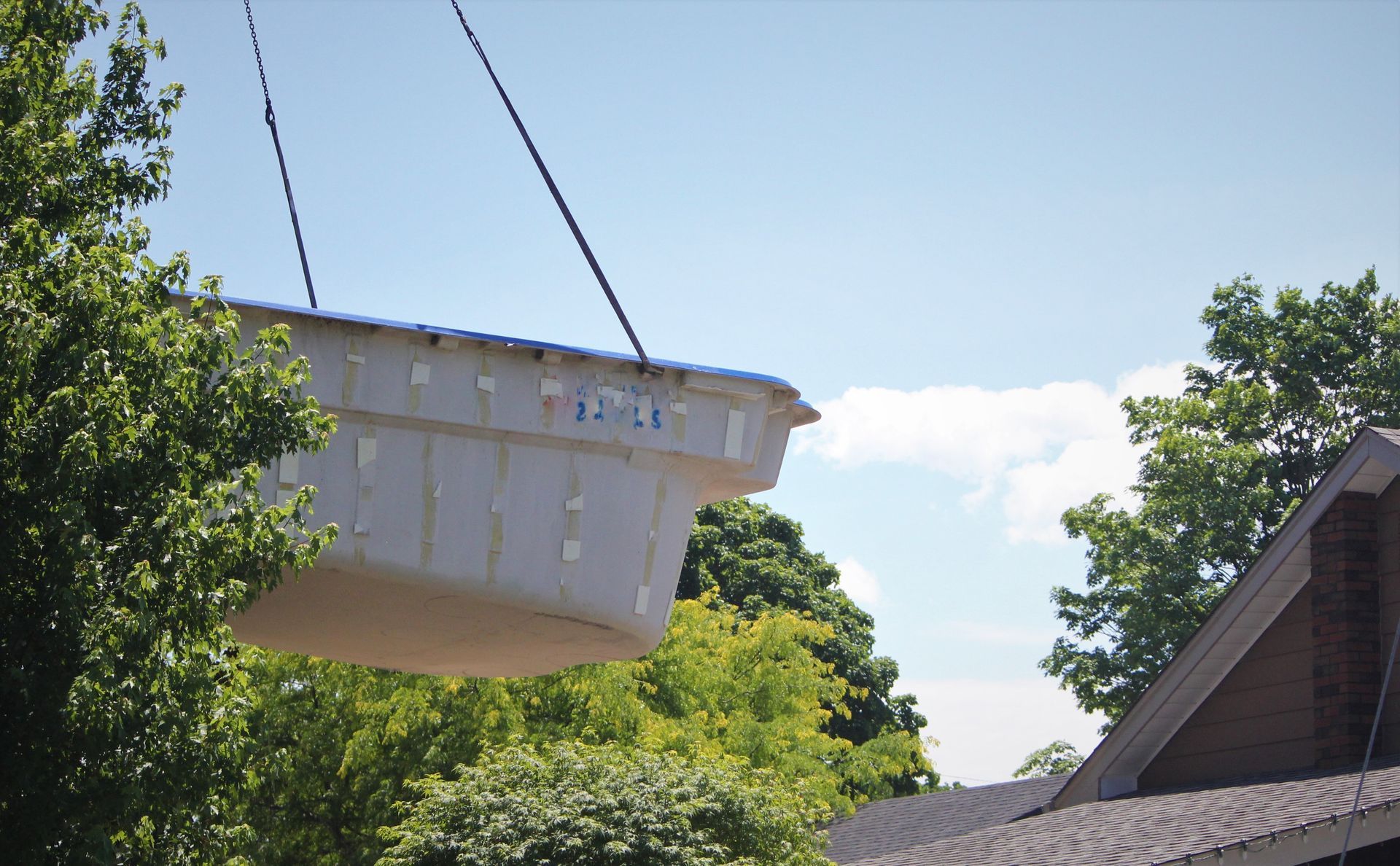
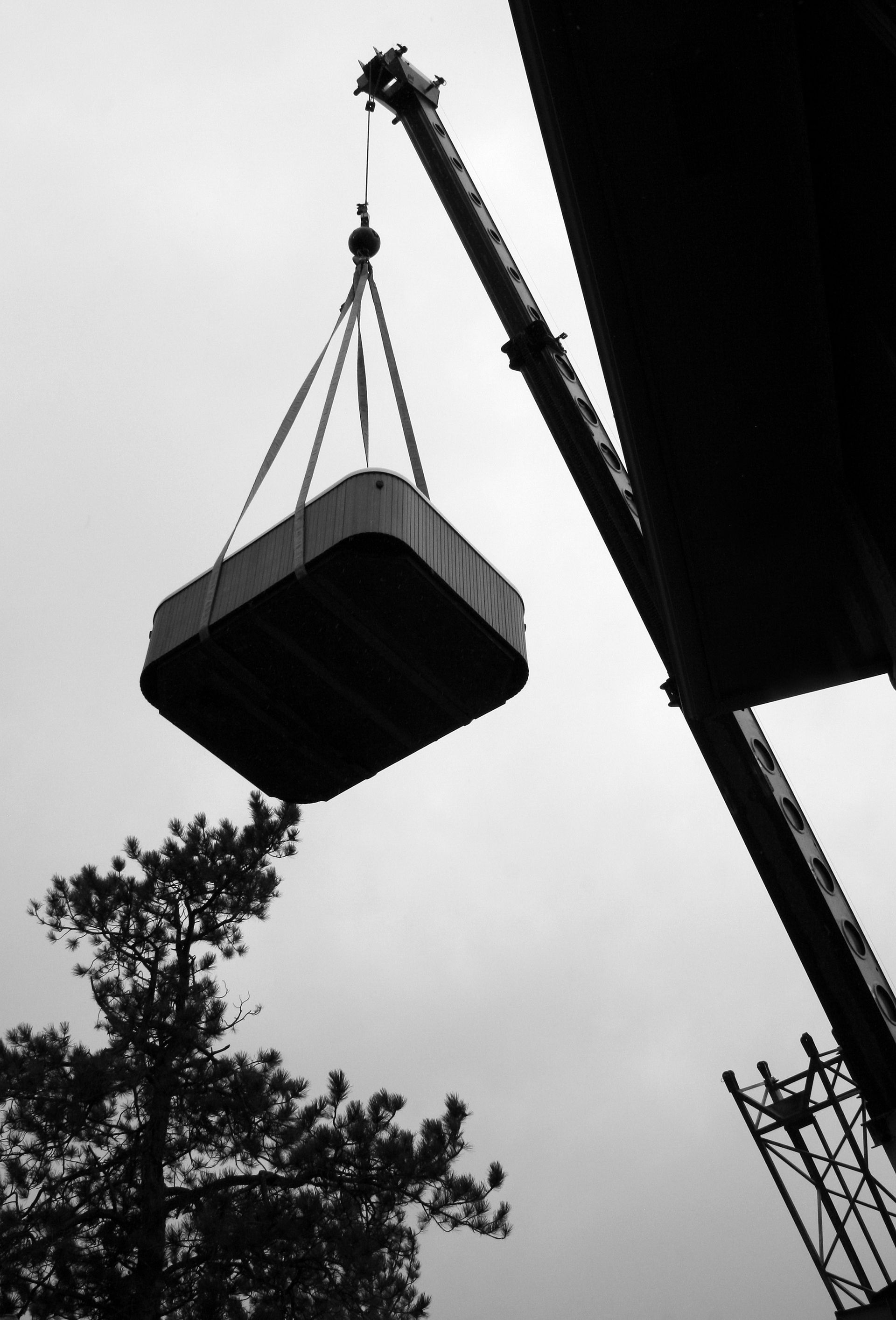
When a spa cannot pass through a yard, it may need to be lifted over a house, wall, or fence. Crane placement requires planning around power lines, street access, and clearance at the new site.
Spa Types and How They Affect Spa Moving
The type of spa you own changes the equipment and technique used during spa moving.
Acrylic Hot Tubs
Standard acrylic spas are the most common units handled in spa moving. They typically weigh between 500 and 1,000 pounds empty and are usually moved on their side using a spa sled or dolly to fit through gates and side yards.
Rotomolded and Plug-and-Play Spas
Rotomolded spas are lighter and made from a single molded shell. They are easier to handle, but spa moving still requires care to avoid gouging the surface or cracking plastic fittings.
Swim Spas
Swim spas can be 12 to 20 feet long and weigh several thousand pounds empty. Spa moving for a swim spa often requires heavy equipment, extra crew, and in some cases a crane lift to clear a house or fence line.
In-Deck and Recessed Spas
Spas built into a deck or set below grade need to be freed from their surround before spa moving can begin. Trim panels, decking boards, or framing may need to be removed and reinstalled.
Request a Hot Tub Moving Quote for Your Southern California Property
Setting the Spa After Spa Moving
Once the spa reaches its new location, it is positioned carefully onto its base. The spa is lowered from its side, aligned with the electrical access point, and checked for level. From there, an electrician can reconnect power, and the spa can be refilled, inspected for leaks, and balanced before use.
Call Express Spa Deliveries for Spa Moving in Southern California
Spa Moving FAQs
What is the difference between spa moving and hot tub moving?
The terms are often used interchangeably. Spa moving typically covers a wider range of units, including hot tubs, swim spas, portable spas, and in-deck spas.
How much does a spa weigh during spa moving?
Most standard spas weigh 500 to 1,000 pounds empty. Swim spas can weigh several thousand pounds empty, which requires heavier equipment and a larger crew.
Can a swim spa be moved?
Yes. Swim spa moving usually requires heavy equipment, a larger trailer, and sometimes a crane due to the unit's length and weight.
Does spa moving require a crane?
Not always. A crane is typically only needed when there is no ground-level path wide enough for the spa to pass through.
How wide does a gate need to be for spa moving?
The gate generally needs to be a few inches wider than the spa's depth, since the spa is turned on its side. Most standard spas are 32 to 40 inches deep.
Can an in-deck spa be removed and moved?
Yes, but the surrounding decking or trim may need to be removed first so the spa can be lifted out and placed on a sled.
How should I prepare my spa before spa moving?
Drain the spa, allow it to dry, have an electrician disconnect the power, remove the cover and accessories, and clear the path from the spa to the street.
Will spa moving damage my yard?
Proper equipment, padding, and route planning reduce the risk of damage to lawns, pavers, and landscaping during spa moving.
Can I move my spa myself?
Moving a spa without the right equipment can cause injury and damage. The weight, size, and balance of a spa make professional spa moving the safer choice.
What happens if my new base is not level?
An uneven base can stress the spa's frame and shell over time. The foundation should be level and solid before spa moving day.
How soon can I use my spa after it is moved?
Once power is reconnected, the spa is refilled, and the water is heated and balanced, it is ready to use. This usually takes one to two days.